Overview of Artemis II's Return
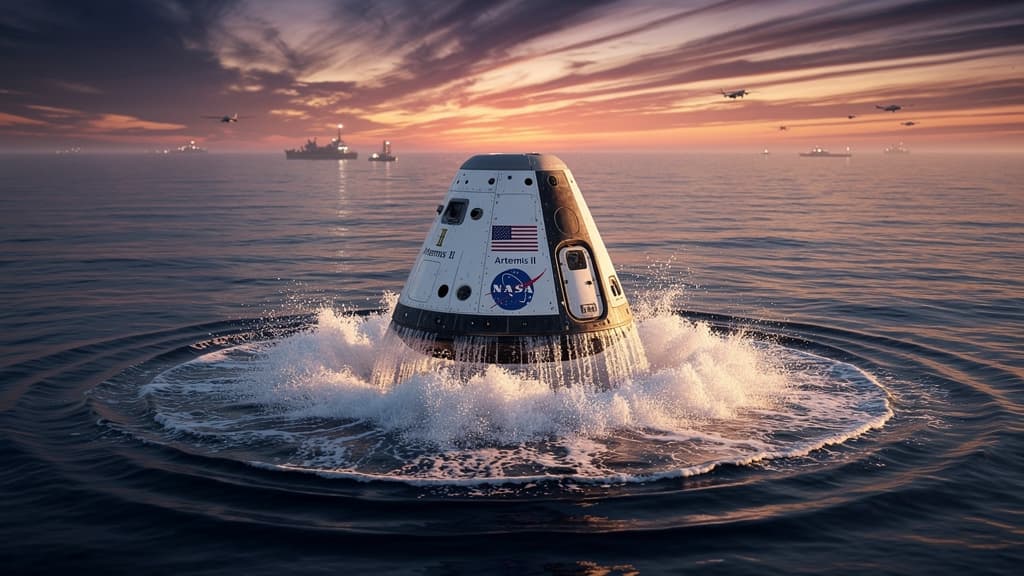
The Artemis II mission, part of NASA's program to advance lunar exploration, is scheduled for its return phase today. The mission is set to culminate in a splashdown this evening, as the spacecraft re-enters the Earth's atmosphere. The return process is expected to take approximately 14 minutes from initial atmospheric entry to touchdown in the ocean [1].
Re-entry Challenges
The crew on board Artemis II will face significant technical challenges during re-entry. Precise trajectory adjustments are essential to ensure the spacecraft hits the correct re-entry angle. Deviations could potentially result in excessive heating or missing the designated splashdown zone. NASA has emphasized the importance of these maneuvers for the mission's success [1].
Live Coverage and Viewing Information
For the public and space enthusiasts, NASA has arranged to broadcast the re-entry and splashdown events live. The livestream will provide real-time updates and coverage of the critical stages as they occur. This event represents a key step for NASA's Artemis program, which is focused on paving the way for future manned lunar missions [2].
Background on the Artemis Program
The Artemis program is a continuation of NASA's long-standing objectives to return humans to the Moon and possibly, in the future, Mars. Artemis II specifically aims to test the spacecraft systems in preparation for later missions that will attempt lunar landings. This mission's successful completion is viewed as pivotal for assessing the readiness of technology and human operations in space [1][2].
The upcoming splashdown not only tests technical capabilities but also serves as a practical demonstration of the Artemis program's progress. The outcomes will contribute to planning and risk management for subsequent missions aimed at exploring deeper into our solar system.