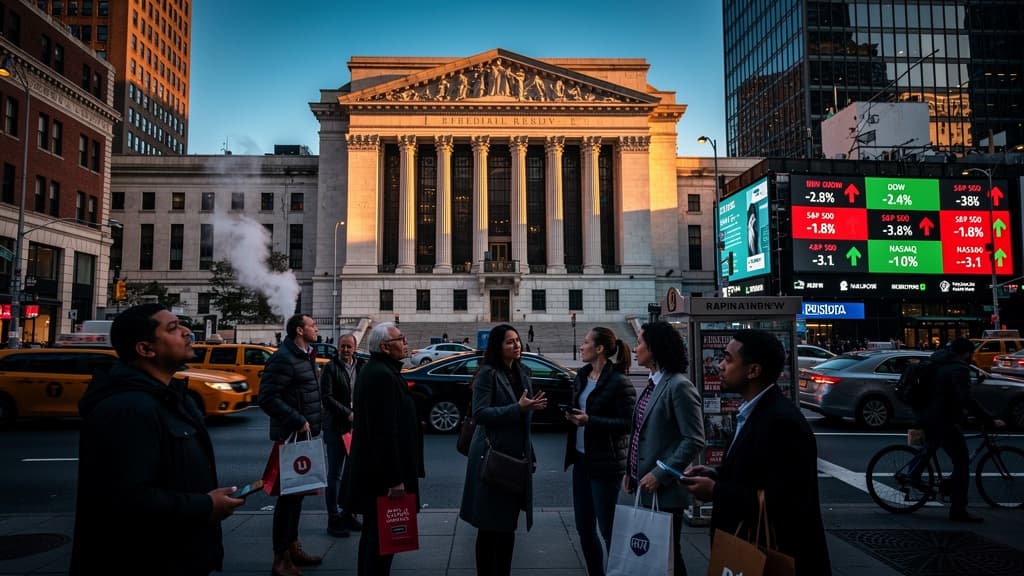
Federal Reserve's Inflation Management
The U.S. Federal Reserve is navigating heightened challenges in managing inflation, exacerbated by ongoing military tensions with Iran. This conflict has triggered an energy shock, complicating the Federal Reserve's decisions regarding interest rate adjustments [1]. Historically, the Federal Reserve has used interest rate hikes as a primary tool to control inflation; however, the recent geopolitical developments have introduced new variables into this equation.
Consumer Spending Trends
U.S. consumer spending showed minimal growth in February 2026, reflecting wider economic pressures [2]. The core personal consumption expenditures price index, a key measure of inflation, rose by 0.4% from January and 3% year-over-year, highlighting persistent inflationary pressure [2]. As consumer expenditure remains a critical component of economic health, these figures indicate cautious consumer behavior amidst economic uncertainties.
Labor Market and Economic Growth
Despite inflationary pressures, the labor market has displayed robust signs. Recurring jobless claims fell to their lowest levels in nearly two years, indicating a resilient employment landscape [2]. Additionally, inflation-adjusted Gross Domestic Product (GDP) increased at a 0.5% annualized rate in the fourth quarter of 2025, demonstrating modest economic growth [2]. These indicators provide a nuanced view of the economy's current state, where inflation challenges are counterbalanced by positive employment data.
Energy Markets and Economic Policy
The conflict with Iran is significantly impacting global energy markets, which in turn influences domestic economic policy. Energy price spikes are fueling inflation, a situation that necessitates careful policy considerations by the Federal Reserve [1]. Given the interconnected nature of global economies, developments in the energy sector are closely monitored as they have far-reaching implications for inflation dynamics and overall economic stability.