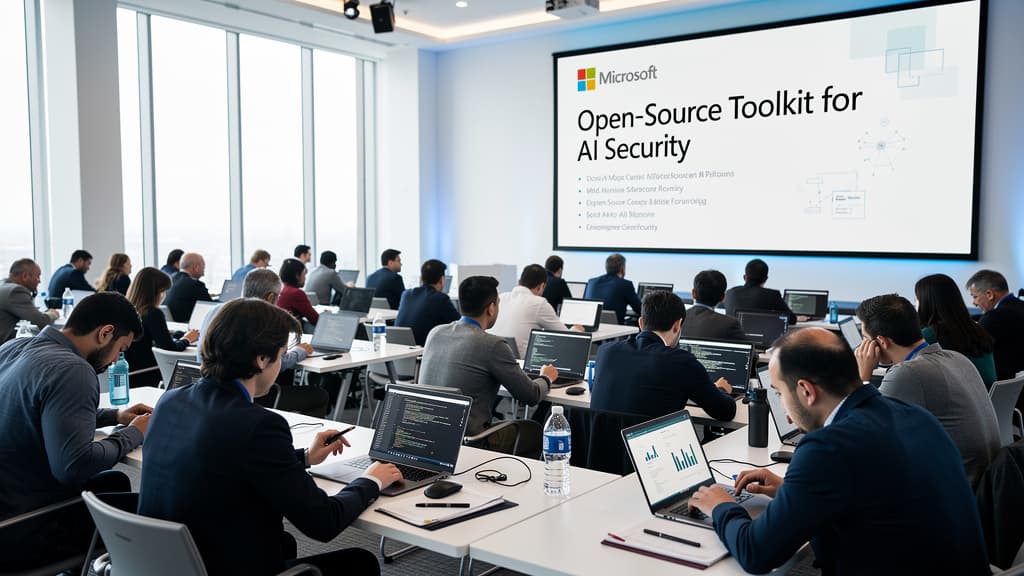
Microsoft Launches AI Security Toolkit
Microsoft has announced the release of a new open-source toolkit aimed at enhancing the security of AI agents operating at runtime. The toolkit is part of a broader initiative to address concerns regarding the increasing complexity and autonomy of language models deployed in enterprise settings. This release comes as AI systems are increasingly tasked with executing code and integrating with corporate networks at speeds that traditional policy controls struggle to match [2].
Addressing AI Governance Challenges
The toolkit is designed to enforce strict governance and security protocols for AI agents. It aims to provide a framework that can handle the dynamic nature of these systems, which have evolved from simple conversational interfaces to complex decision-making entities capable of independent action. This evolution has outpaced the development of traditional security measures, prompting the need for innovative solutions like Microsoft's new toolkit [2].
Open Source and Industry Implications
By offering this toolkit as open-source, Microsoft encourages collaboration across the industry to deepen the effectiveness of AI security solutions. The toolkit is expected to appeal to a wide range of users, from large enterprises to small tech startups, by providing adaptable security features that can be integrated into existing systems. This move may also influence the development of similar security measures within the industry, potentially setting new standards for AI governance [2].
Broader AI Landscape
The release of this toolkit occurs within a rapidly growing AI landscape. As autonomous language models become more widespread, the need for robust security protocols has become pressing. The open-source approach not only democratizes access to advanced security solutions but also harnesses community input for continuous improvement [2]. This development aligns with broader industry trends where smaller entities, such as the 26-person startup Arcee, have gained traction through their innovation in open-source AI models [1].