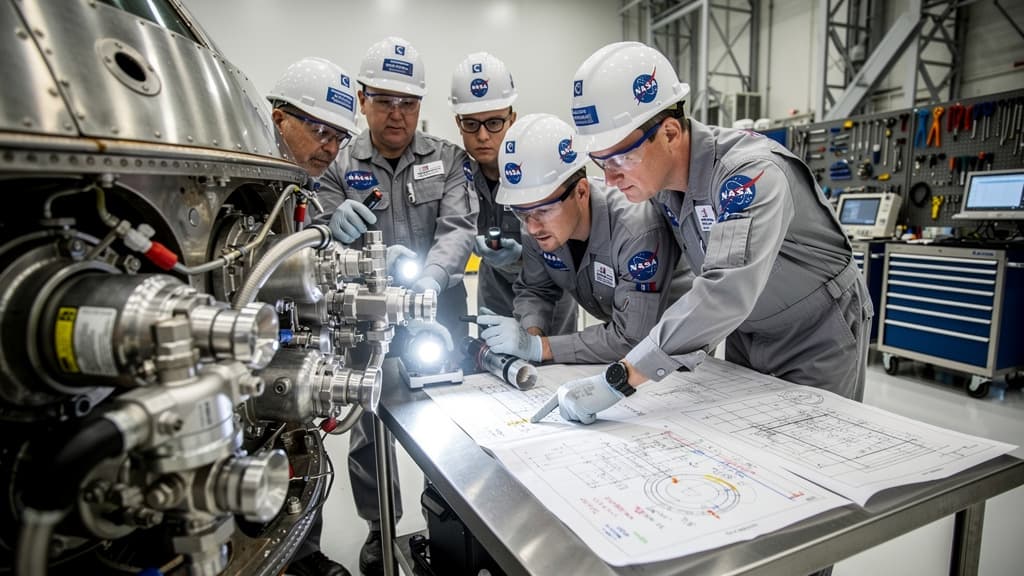
NASA Identifies Valve Leak Issue in Orion Spacecraft
The Orion spacecraft, which has been used in NASA's Artemis program for lunar missions, has experienced helium leaks that were identified after missions Artemis I and II. NASA announced that the observed leaks do not compromise the safety of the Artemis II mission, particularly during reentry, but the issue will necessitate a redesign of the spacecraft's valves for subsequent flights[1][2].
Helium Leak Details and Implications
The identified leaks are attributed to the helium valves within the Orion spacecraft. Helium is utilized to pressurize fuel tanks, and the leak was detected in both the inaugural uncrewed Artemis I mission and the recent, crewed Artemis II mission. While these leaks were determined to be non-threatening to mission safety, NASA has decided that a redesign is necessary to prevent recurrence in future missions and to maintain the integrity of the spacecraft's systems[1].
Artemis Program's Commitment to Safety
Artemis II is set to be a crucial testing phase with astronauts on board as they travel to the Moon and return, moving at speeds of 32 times the speed of sound during reentry. Despite the leak, NASA reassures that the mission's safety protocols are robust and there is no increased risk of failure due to this issue. Reentry phases have historically been critical for the success of space missions, with designs being scrutinized to prevent failures[2].
Future Considerations and Mission Continuity
As NASA plans further Artemis missions aiming for lunar surface landings and extended exploration, addressing the helium leak will be a priority for engineers to ensure future mission safety and success. The organization remains focused on advancing its methodologies to guarantee the sustainable operation of spacecraft under the Artemis program and beyond[1][2].