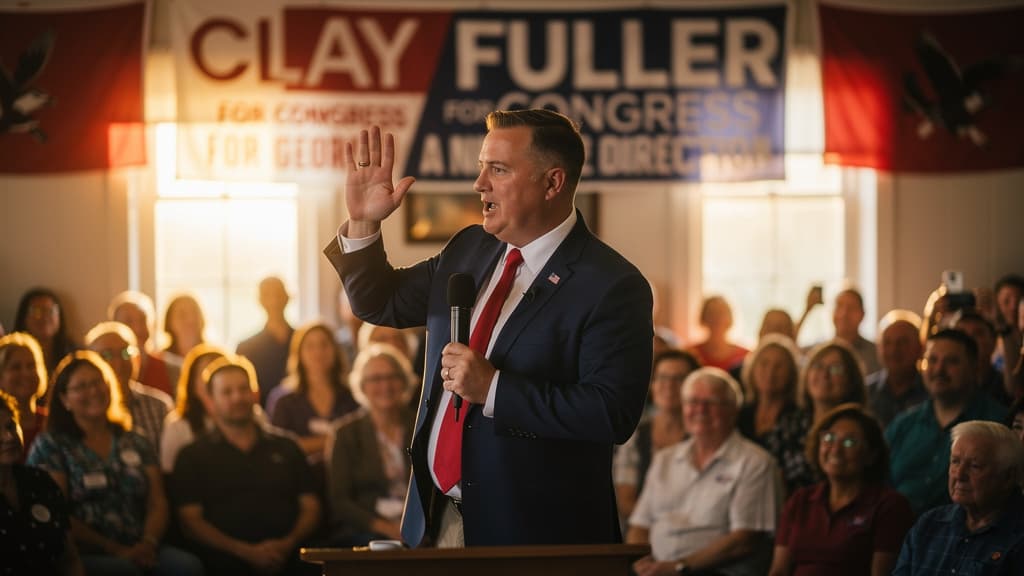
Republicans Secure Victory in Georgia Special Election
On Tuesday, Republican candidate Clay Fuller emerged victorious in the special election for Georgia's 14th Congressional District. This election was held to replace former Representative Marjorie Taylor Greene. Fuller's success in maintaining the seat for Republicans comes in spite of significant inroads made by Democrats, marking the largest shift to the left seen in recent special elections conducted in competitive regions [1][2][3].
Democratic Gains Signal Shift
While Fuller secured victory by approximately 12 percentage points, the outcome revealed a notable shift among voters. This district had previously shown strong support for Republican candidates, as demonstrated during the 2024 presidential election. However, Democratic candidate Shawn Harris, while unsuccessful, managed to shrink the Republicans' lead dramatically, flipping the district 25 points towards Democrats [1][2][3].
Implications for National Political Climate
The results in Georgia's 14th District point to a broader trend that is becoming evident nationwide. Although Republicans have retained control in various races, their dominance appears to be diminishing. The decline in Republican candidate support is not isolated to Georgia; similar outcomes were observed in Wisconsin, where conservative candidates faced losses [2].
Voter Sentiment Towards Major Parties
The election results come amid President Donald Trump's continued involvement in endorsing Republican candidates, a factor noted during Fuller's campaign [4]. Concurrently, a prevailing sentiment among voters shows continued disapproval of both major parties. Despite Trump's low overall popularity, the Democratic Party's inability to leverage this effectively reflects an ongoing division in voter leanings, where dissatisfaction with both parties persists [5].
Overall, while Republicans maintain some electoral successes, the shifting political landscape signals growing challenges. The evolving preferences among the electorate may have implications for upcoming elections, as party strategies adapt to address changing voter dynamics.