Republicans Secure Georgia Special Election
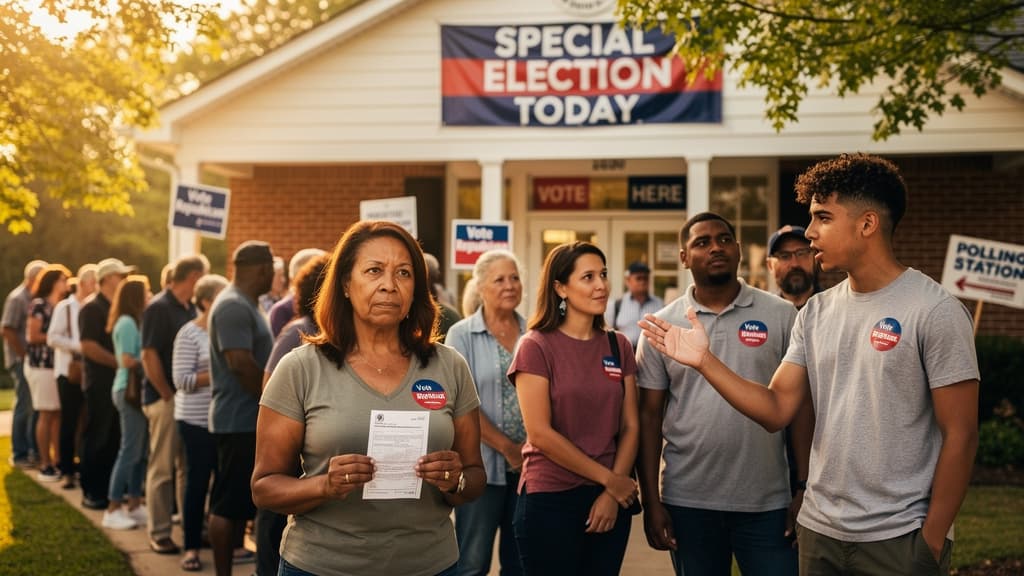
On April 7, 2026, Republicans fortified their position in the U.S. House of Representatives by winning a special election in Georgia's 14th Congressional District. Republican candidate Clay Fuller won the seat previously held by Marjorie Taylor Greene, maintaining the GOP's control despite a notable shift towards the Democratic Party in this traditionally conservative district [1][4].
Significant Democratic Swing
Democratic candidate Shawn Harris managed to narrow the margin significantly, losing to Fuller by approximately 12 percentage points. This represents an impressive 25-point swing to the left since the 2024 presidential election [2][3]. The district’s shift illustrates changing political dynamics, although Republicans ultimately secured the victory with the backing of President Donald Trump [4].
Context of Trump’s Endorsement
The election's dynamics are influenced by President Donald Trump's endorsement, which appeared to solidify Republican support in the district [4]. However, despite Trump's role, broader voter sentiment is nuanced. Recent analyses suggest that while Trump remains unpopular with a significant segment of the electorate, this dissatisfaction does not necessarily translate into increased support for the Democratic Party [5].
Electoral Implications
The outcome in Georgia, alongside results from recent elections in Wisconsin where conservative candidates were defeated, suggests a complex electoral environment [2]. As voters express mixed sentiments towards major parties, the political landscape may be in a state of evolution, potentially affecting future races and strategies for both Republicans and Democrats.
Broader Political Context
The election results emphasize the potential volatility in traditionally Republican strongholds, signaling possible challenges for the GOP in maintaining their voter base. At the same time, the Democratic Party sees opportunities to capitalize on shifting voter preferences, though the full implications of these changes heading into future election cycles remain uncertain [2][3][5].