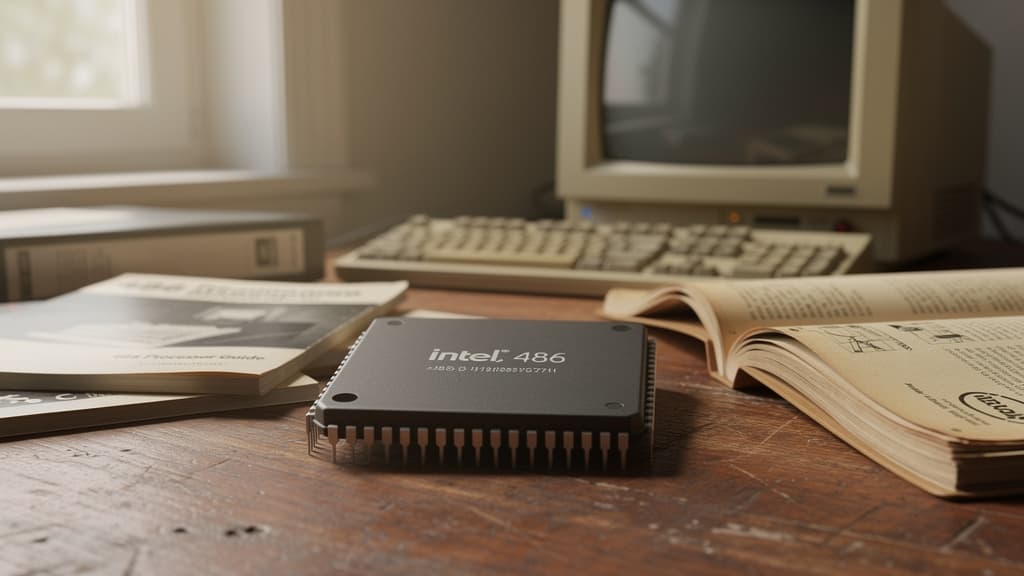
Intel Introduces the 486 Microprocessor
On April 10, 1989, Intel Corporation announced the introduction of the Intel 486 microprocessor, marking a major milestone in computing technology. This new CPU represented a significant advancement in the integration of processing components, effectively setting a new standard for personal computers at the time.
Key Features and Impact
The Intel 486 processor was noted for its increased speed and efficiency, resulting from its ability to integrate approximately 1.2 million transistors on a single chip. This was a substantial increase compared to its predecessor, the Intel 386, which had about 275,000 transistors. The 486's design enabled enhanced processing power, primarily due to its embedded math coprocessor and 32-bit architecture, which allowed for quicker computations and better multitasking capabilities.
The improvements brought by the 486 CPU not only improved general computing performance but also laid the groundwork for graphical user interfaces and more complex software applications, driving forward both business and personal computing uses.
Adoption and Legacy
Following its release, the Intel 486 CPU quickly became the cornerstone of many high-performance PCs throughout the early 1990s. Its introduction facilitated advancements in operating systems such as Microsoft's Windows and prompted competition among other microprocessor manufacturers. The legacy of the 486 extends beyond its initial technological leap, as it paved the way for future developments, including Intel's Pentium series, which continued the trend of integrating more functions and increasing performance on a single chip.
Historical Context
The announcement of the Intel 486 came at a time when the personal computer industry was rapidly expanding, and consumer expectations for computational power and efficiency were increasing. The introduction of the 486 processor supported this growth by enabling more powerful and user-friendly computing experiences.