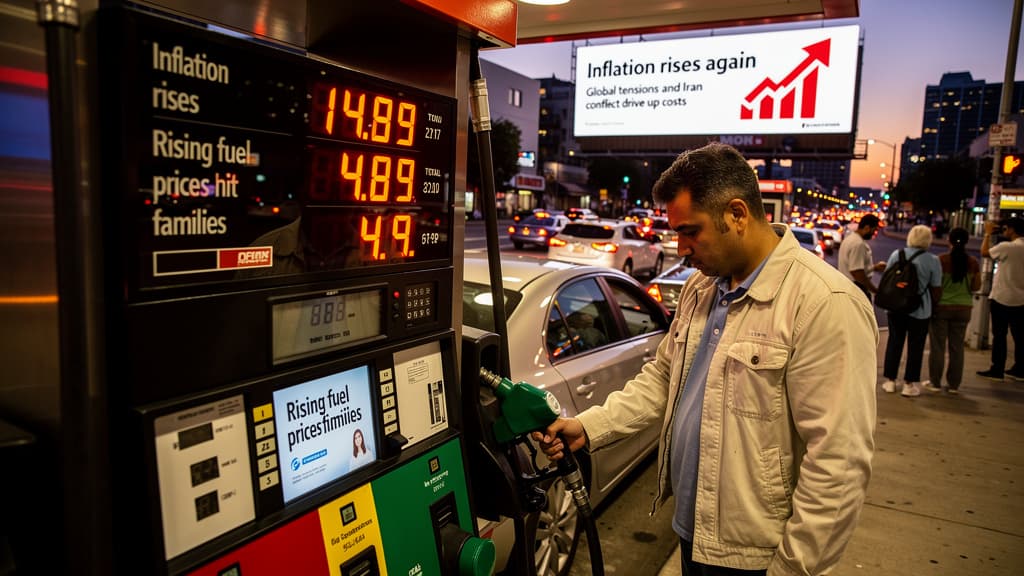
Consumer Price Increase in March
Consumer prices in the United States increased by 0.9% in March 2026, marking the highest monthly inflation rate in nearly four years. The increase is largely attributed to rising gasoline prices, which surged due to the ongoing military conflict involving Iran. According to the Bureau of Labor Statistics, the annual inflation rate now stands at 3.3% [1][2].
Impact of the Iran Conflict on Gas Prices
The conflict in Iran has been a significant factor influencing gas prices worldwide. As a major oil-producing nation, disruptions in Iran's oil production and distribution have led to increased energy costs across global markets. This change has had a direct impact on consumer prices in the U.S., as energy expenses comprise a significant portion of the Consumer Price Index (CPI). The latest data marks the first inflation reading to fully incorporate these geopolitical influences [1][3].
Broader Economic Context
This inflation spike occurs against a backdrop of ongoing economic recovery efforts following the COVID-19 pandemic's economic ramifications. It also reflects broader trends in energy markets, where price volatility is often influenced by geopolitical events. Analysts will be monitoring how prolonged this inflationary trend might be, depending on the duration and impacts of the conflict in Iran [2].
Responses from Economic Analysts
Economic experts are analyzing the potential long-term consequences of this recent increase in inflation. Some anticipate that sustained high energy costs could lead to broader economic impacts, influencing purchasing power and overall economic growth in the United States. Policymakers are likely to consider these developments as they formulate responses to mitigate potential negative outcomes [3].
Future Implications
The present situation underscores the interconnected nature of global events and domestic economic indicators. As the U.S. continues to navigate these challenges, shifts in energy policy and strategic alliances may play a role in addressing the wider economic implications of the ongoing conflict in Iran.
Overall, the March CPI data highlights a pivotal moment shaped by international events, with significant bearings on domestic economic conditions [1][2][3].